
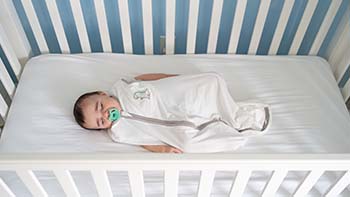
Few things are sweeter than a sleeping baby. Keeping that baby safe during sleep is one of the most important things parents and caregivers do. Each year in the United States, about 3,400 babies die suddenly and unexpectedly, many of them during sleep. These deaths include sudden infant death syndrome (SIDS) and accidental suffocation. There’s no sure way to prevent SIDS, but safe sleep habits greatly lower the risk, and they’re simple to follow.
Remember the ABCs: Alone, Back, Crib.
- Alone. Your baby should sleep in their own space, with no pillows, blankets, bumpers, stuffed animals or toys. A bare crib may look empty, but it’s the safest place for a baby to sleep.
- Back. Always place your baby on their back to sleep, for naps and at night, until their first birthday. Back sleeping is the single best way to lower the risk. Once a baby can roll over both ways on their own, you don’t need to turn them back over, but always start them on their back.
- Crib. Use a firm, flat sleep surface, such as a crib, bassinet or play yard that meets current safety standards, with only a fitted sheet. Never use an inclined sleeper.
Share a room, not a bed. Experts recommend keeping your baby’s crib or bassinet in your room, close to your bed, for at least the first six months. Bed sharing raises the risk of suffocation. Couches and armchairs are especially dangerous places to fall asleep with a baby.
Keep baby comfortable, not too warm. Dress your baby in light sleep clothes. A wearable blanket or sleep sack keeps them cozy without loose bedding. Avoid hats indoors and watch for signs of overheating, like sweating or a flushed face.
Skip the gadgets. Wedges, positioners and special mattresses marketed to reduce SIDS have not been shown to work, and some have been linked to infant deaths.
Move sleeping babies to a safe surface. Babies often fall asleep in car seats, swings and strollers. Once you arrive, move your baby to a crib or bassinet on their back.
Protect baby’s air. Keep your baby’s environment smoke-free, before and after birth. Breastfeeding, when possible, and offering a pacifier at sleep time are also linked to a lower risk.
Make sure every caregiver knows. Grandparents, babysitters and relatives may have learned different advice years ago. Licensed child care programs follow safe sleep rules every day, and families can do the same at home. Share these steps with anyone who puts your baby to sleep.
Every sleep, every time: alone, on the back, in a crib.
Sources: Centers for Disease Control and Prevention, Helping Babies Sleep Safely; National Institutes of Health, Safe to Sleep® campaign, Reduce Baby’s Risk.